
THE RITE TO REMAIN SILENT
CATHY O'BRIEN AND THE GHOST OF DE SADE
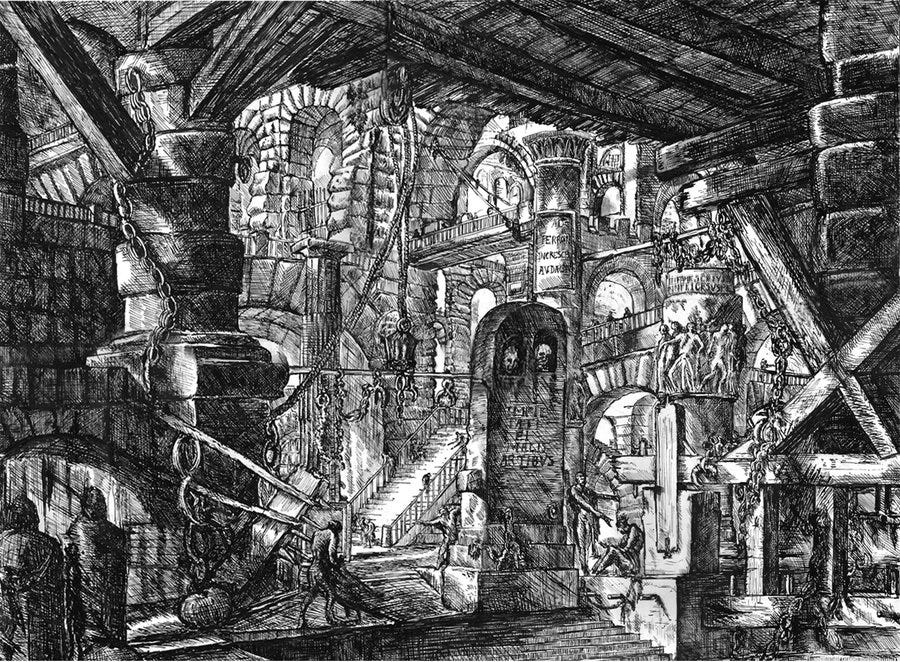
‘Once upon the throne of kings, there shall never have been a tyranny to equal ours, no despot shall ever have put a thicker blindfold over the eyes of the people; plunged into essential ignorance, it shall be at our mercy, blood will flow in rivers, our Masonic brethren themselves shall become the mere valets of our cruelties, and in us alone shall the supreme power be concentrated; all freedom shall go by the board, that of the press, that of worship, that simply of thought shall be severely forbidden and ruthlessly repressed; one must beware of enlightening the people or of lifting away its irons when your aim is to rule it.’
From Juliette, or The Prosperities of Vice, by the Marquis de Sade, 1797-1801
Western Society, it appears, is now completely in thrall to its Shadow. C G Jung taught that if individuals cannot confront their Shadow — the unacceptable, repressed aspects of the personality — if they deny its existence, then it will end up controlling them. ‘It is a frightening thought,' he wrote, ‘that man also has a shadow side to him, consisting not just of little weaknesses and foibles, but of a positively demonic dynamism.’ (On the Psychology of the Unconscious, 1912.)
‘Taking it in its deepest sense, the shadow is the invisible saurian tail that man still drags behind him. Carefully amputated, it becomes the serpent of healing of the mystery. Only monkeys parade with it.’ (The Integration of the Personality, 1939).
What is true on the individual level is multiplied on the collective. Civilisations and societies have their own long, deep Shadows, and as Jung frequently emphasized, when an inner situation is not made conscious, it happens outside, as fate. Viewed in that light, all we ‘conspiracy theorists’ have been doing, or trying to do, is shadow-work to keep a society sane.
‘Filling the conscious mind with ideal conceptions,’ wrote Jung at the end of the second World War, ‘is a characteristic of Western theosophy, but not the confrontation with the shadow and the world of darkness. One does not become enlightened by imagining figures of light, but by making the darkness conscious.’ (The Philosophical Tree, 1945)
I’m sure I don’t have to spell out why I’ve been thinking about Jung’s Shadow archetype. Podesta and Alefantis, Wayfair and Balenciaga, Frazzledrip and the adrenochrome factories — even the sickest rumours are true. Now, with the release of some of the Epstein files, the Caligula-level cruelties hidden by that dense, dark shadow are visible to all who choose to look. How many will, I don’t know. It is traumatising even to know about these things, and many will choose to protect themselves from the knowledge.
What is done to children in this world — the most lethal text of all.
I came across the quotation at the head of this essay in Geoffrey Ashe’s The Hellfire Clubs — A History of Anti-Morality (The History Press, 2000), the best book I ever picked up in an airport bookstall. I wonder if Ashe has been tempted to write a follow-up, so much has come out about sadistic networks in the US, the UK, and throughout the Western world since the book was written. Anti-morality is a theme that has only grown in relevance, and could sustain further development. Ashe was my introduction to de Sade, and that speech tied a number of things together for me. It is put in the mouth of an unnamed Swedish conspirator, a member of a Templar Lodge which aims to overthrow kings in the name of Liberty, but with no democratic or egalitarian motive.
Later I tried to find a more precise reference and the name of the speaker, by force-reading Juliette, or The Prosperities of Vice. Twelve hundred pages of predictable dross, divided into six parts: predictable because the abuse and exploitation of the innocent by the vicious is the mundane way of de Sade’s world. The main characters themselves define the futility of their obsession: that outrage
“…has its limits, even for the superhuman libertines of a Sade novel. Their crimes have made them rich, and they live sumptuously in tasteful surroundings, yet at times their appetites become jaded. Restlessly they crave ghastlier thrills. Sade’s philosophy, in the end, defeats itself. If Nature endorses anything and everything, then you can’t really be outrageous; you can’t defy Nature, except perhaps by outdoing her. You can outrage Respectability as the rakes did in England, but to Sadian intellectuals that is a trifle. They yearn for a living mystique of outrage, and their own arguments seem to make that impossible. ‘When, sighs Clairwil, will I be able to do an authentic evil?’ Again, ‘Could I set the planet ablaze, even so would I curse the Nature that had provided only one world for my desires to feast upon’.” (Ashe)
This evocation of the ultimate and actual banality of evil is, for this reader at least, the only thing that gives any point to the repetitiousness of its storyline, with de Sade’s plodding, mechanical prose embodying a plodding, mechanical imagination. It was when I realised that each part was in fact the condensed version of an entire volume, and that Ashe’s quotation was buried somewhere in de Sade’s sprawling labyrinth of versions written over a period of four years, that I finally gave up.
The speech, however, is interesting, calling to mind that sentence in Aldous Huxley’s letter to the dying George Orwell:
‘The first hints of a philosophy of the ultimate revolution — the revolution which lies beyond politics and economics, and which aims at total subversion of the individual’s psychology and physiology — are to be found in the Marquis de Sade, who regarded himself as the continuator, the consummator, of Robespierre and Babeuf.’
(Aldous Huxley, letter to George Orwell, 21 October 1949)
Ashe’s quotation makes sense not just of Huxley’s teasing reference, but of the strange rumour that Juliette was Georges Danton’s favourite book, and the surprising fact that the French Revolution’s Constituent Assembly freed de Sade from the Bastille and gave him an administrative job — surprising perhaps only to a reader still suffering from some residual naivety as to the true nature and provenance of the French Revolution.
While the name of de Sade carries a certain fascination in the public mind, the fact is that as a sexual abuser, a predator, as a Sadist in fact, the man was a comical failure. Ashe’s portrayal of ‘the divine Marquis’ is laced with absurdity, though set against a nyktomorphic background of considerable darkness. Donatien Alphonse François, the Marquis de Sade, born in 1740 of a distinguished Provençal family, cuts from any sane perspective a rather pathetic figure. For one thing, according to a police description of him, he was physically repulsive — short, pudgy, and ugly as sin. For another, his abortive attempts to live out his sexual fantasies constantly landed him in prison. He was ‘a psychopathic pervert, but of an ineffectual kind’. His nemesis was his wife’s mother, Madame de Montreuil, whose implacable enmity, aroused no doubt by the fact that de Sade spent most of his time living with his wife’s younger sister, was a major influence in securing his various prison sentences. De Sade was a minor aristocrat, and where a wealthier nobleman of higher station might buy immunity, he was endlessly tantalised by his own vision of unaccountability, and never realised it except on paper. For de Sade, the sublimation of power into sex was repeatedly frustrated, requiring a further sublimation into fiction, and it is this that gives us a window into the tastes of those like him, men like the ‘notorious Duc de Charolais, who found women exciting only when he was shedding their blood’ (Ashe). While de Sade, in prison, whiled away the time by imagining such horrors, we must assume that others with greater immunity carried them out.
De Sade spent a total of twenty-seven years in prison and insane asylums, ten of them in the Bastille, where he wrote 120 Days of Sodom ‘in a microscopic hand on both sides of a hundred-odd small sheets’, glued together to make a forty foot strip, which could be rolled up and hidden. And so he remains a comic figure, not a tragic one. But it is a dark comedy, which gives us access to a bigger picture. Ashe writes, ‘Sexual infamy was the basis of the reasons alleged [for his imprisonments], but would not have condemned him in itself. Other French aristocrats of his time went further.’ He then floats an interesting speculation:
The plain priapic energy of an earlier generation, the Duc de Richelieu’s, was souring into passions of a nastier kind. Having lost status at home and prestige abroad, the nobles were tempted to sexual barbarities, explicit or disguised, as the only means of recapturing a sense of power.
And it is only about power, which is why the Marquis could be reconciled with the Revolution, and vice versa. De Sade, writes Ashe, ‘believed at heart in Liberty without either Equality or Fraternity’; therefore Liberty would only be enjoyed by power; and this is his definition of Libertinism.
De Sade was born in the wrong century. Imagine what a great time he’d have had in Washington or Palm Beach in the early twenty-first century, what convivial company he’d have had, how much he could have got away with, without ever having to spend a day in prison. Whatever else they are, Satanists and Baal-worshippers or just followers of pedophile fashion, the little Caligulas populating the Epstein files are certainly sadists, and the vile Marquis is the perfect model for such contemptible creatures.
I first read The Trance-Formation of America by Cathy O’Brien and Mark Phillips in 2005, in my third-floor flat on J J Cremerplein in Amsterdam. I’d heard about it somewhere and looked it up on the internet. It hit me hard, and writing about it brings back a sharp memory of that time and place: the weird layout of the apartment, the desk jammed into that tiny hallway, the clunky desktop computer, the sagging bookshelf above it, and the blue typescript I’d found on a Spanish website, riddled with scanner-errors. I could have sent off for a copy, but I couldn’t wait — and somehow it seemed more appropriate to read it like that in samizdat.
Cathy was abused from birth by her father Earl O’Brien, a worm-digger with a sixth-grade education in Muskegon, Michigan, who prostituted her to tourists and drug dealers, and used her in pornography. When Cathy was seven he was caught sending pornography through the mail. However, the state did not come to her rescue. Instead, her father was offered a deal: there was an alternative to going to prison — to sign his daughter over into the CIA’s mind control project MK-ULTRA, sub-project MONARCH.
Children below the age of five who suffer severe sexual abuse often develop what used to be known as Multiple Personality Disorder, more recently renamed Dissociative Identity Disorder: a fragmentation of the personality through compartmentalization of memory. This splintering of the young mind in response to abuse too horrible to comprehend is a defense mechanism. “We do not suffer from MPD,” states one victim cited in an academic paper. “We survive because of MPD.” The CIA, like the SS on which it was modeled, was interested in the potential this psychological syndrome offered for mind-control, i.e., the obliteration of the will and the conscious mind, an induced robotic compliance and amnesia achieved through trauma, hypnosis, electro-shock and drugs. The sexually abused child separates off its thoughts, feelings, and memories of traumatic experiences. The response is more deeply ingrained with repeated abuse, becoming highly conditioned and hypersensitized, and recurring in the presence of even the smallest trigger. DID is a survival mechanism; the irony, of course, is that it protects not just the abused, but the abuser. The possibilities were endless: sex slaves for use in political corruption and control; programmable assassins, torture-proof couriers; and the potential for an undetectable infiltration of society by programmed androids, like something out of a Phillip K Dick novel.
That’s why, in the late fifties and sixties the agency began to acquire thousands of abused and expendable children, the vast majority of whom would not survive the programming process: even the most useful and successful would be killed off at the age of thirty, when typically the programming would begin to deteriorate. Cathy, abused from infancy and already dissociative and highly susceptible to hypnosis, was perfect for the project. She was a ‘Chosen One’, and her journey, like a twisted Rags to Riches tale, takes her to governors’ palaces, Nashville, and the White House.
Trauma-based mind control techniques, according to the authors, originated in research into multigenerational Satanist families conducted in Nazi Germany by the Schutzstaffel (SS), under the personal oversight of Heinrich Himmler. The research was resumed in the United States no later than 1951 under Project BLUEBIRD, which morphed into ARTICHOKE and MKNAOMI. The aim of these projects was outlined in a memo dated January 1952 that asked, “Can we get control of an individual to the point where he will do our bidding against his will and even against fundamental laws of nature, such as self preservation?” In 1953 Allen Dulles took over as director of the organization he had designed with the help of the top Nazi intelligence chief, General Reinhard Gehlen, and brought the various mind control projects under the umbrella of Project MK-ULTRA, headed by Dr Sydney Gottlieb.
Cathy’s abusers in the sixties and seventies, however, are not National Socialists or even Jewish supremacists, but Catholic priests, Jesuits, Rosicrucians and Vatican Knights. They span the full range of respectability, just like de Sade’s parade of judges, politicians, nobility, priests and monks in his pornographic novels. Since Cathy’s enslavement took place under the auspices of the US Government and military-intelligence complex, there’s a growing preponderance of politicians, up to and including Senators, Presidents, Vice-Presidents, future presidents, and foreign Heads of State, as well as military-Satanic elements, specifically in the form of the notorious Lieutenant-Colonel Michael Aquino, the psychological warfare specialist, Satanist, founder of the Temple of Set and Chaplain to the US Armed Forces. To these you can add a number of well-known entertainers.
It goes right — as Jack Ruby said — to the top. But it starts when Cathy was born to bottom-dwelling monsters. Earl’s father died when Earl was two, and his mother took to prostitution. His brothers and sisters were all ritually abused and grew up to be drug addicts, prostitutes, derelicts and pedophiles — and joined in the sexual abuse of Cathy and her siblings. Her mother was of a higher social class but also abused by her mother and uncles and aunts, who had been abused by their father in turn.
Cathy’s psychological response to the succession of traumas being visited on her young life was, of course, to repress the memories.
I couldn’t think to bring to mind the fact that my father was sexually abusing me when I was any place else, playing with friends or when I eventually went to school or anything like that — I couldn’t think to bring to mind the sexual abuse.
The traumatized child remains consciously unaware of the traumatic memories until they are accessed by a repetition of the abuse, or by hypnotic triggers. This is referred to as a memory ‘compartment’ — an amnesic cyst sealing off the trauma and allowing the rest of the mind to function normally.
Cathy, she relates, was first prostituted to Michigan State Senator Guy VanderJagt, who later became a U.S. Congressman and eventually chairman of the Republican National Congressional Committee that put George H W Bush in the office of President. Meanwhile Earl and Uncle Bob began ‘programming’ her according to MONARCH methodology. They decorated her bedroom in red, white, and blue paneling and American flags. Fairytale themes were used to confuse fantasy with reality, as well as Disney stories and especially The Wizard of Oz, which provided the base for future programming.
The lethality of the text, and the suffocating completeness of the world it encompasses — its storyworld, in narratological terms — is crowned by a peculiar weave of language and allusion. The exuberant wordplay of the pedophiles, the scrambling and inversion of meaning through programming themes drawn from traditional and popular culture, the interweaving of cultural references into an impenetrable hedge surrounding the Sleeping Beauty, seems prima facie far beyond anything that might have originated in the minds of O’Brien or Phillips. Along with the trauma and torture, these linguistic sophistries made up the spell under which Cathy lived and was used. If you ask her, ‘How do you do?’ she will reply: ‘As I am told, thank you.’ This is her world, and the world is too much with her, to the exclusion of mind, free will, conscious thought, integrated identity or a sense of time. Under constant control and mental scrambling, she is programmed through trauma, torture, electric shock, hypnosis, drugs — and through language and culture. The constant Satanic inversions and mirroring evokes the terrifying psychopathic silliness of de Sade or Jimmy Savile. ‘Some day my prints will come’, sings the pornographer. She is Pinocchio, a puppet still in the carving stage. She is Cinderella. She doesn’t know who she is. Wonderland themes keep her confused — the White Rabbit chivvies and harries her to appointments with the Wizard and the Lizard of Oz. Her captors do the Scarecrow walk, and link arms with her to march her down the Yellow Brick Road. It’s all lost time and Never-Never-Land, ruby shoes and glass slippers, Charm School and My Fair Lady. At Tinker Air Force Base she is the Tinker-Belle, undergoing high-tech tortures to install new programs. The themes are drawn from the culture, from fairytales to Hitchcock movies, from Bewitched and I Dream of Jeannie to Freedom Train, Hotel California and ‘Every Breath You Take’.
Cathy’s identity-splits by this time included personalities for pornography, bestiality, prostitution and incest, as well as a personality for withstanding the psychological abuse of her mother.
The rest of ‘me’ functioned somewhat ‘normally’ at school. My ‘normal’ personality provided a cover for the abuse I was enduring, but best of all it had hope — hope that there was somewhere in the world where people did not hurt each other. This same personality also attended Catechism, a weekly class at our Catholic church, St. Francis de Sales in Muskegon, Michigan.
The hope that still lived in her ‘front’ personality focused itself on religion, and Cathy decided she wanted to become a nun.
I could not rely upon my family, the police, or politicians to protect me. The church appeared to be my answer, and I listened diligently in class and prayed religiously. I learned all about the political structure of the church, and was prepared for my first Confession.
But Cathy would not find safety in the Church, any more than she found it in family or legal authority. On 7th May 1966, ‘dressed in white from my Catholic veil to my white patent leather shoes as was mandatory for making my first holy communion’, she was confirmed in the Catholic Church. Before the ceremony, she was presented with a rosy cross necklace by VanderJagt and a blue Virgin Mary charm by Father Don, the senator’s pedophile colleague in Project MONARCH.
As VanderJagt fastened the rosy cross and blue virgin around my neck, he told me I was now dressed appropriately for the ceremony in red, white, and blue. I could feel his breath on my neck as he fastened the necklace and instructed, “When Father says ‘Body of Christ’ and you say ‘Ahhh men’… you acknowledge that Christ is God made man, and that you know what men are for. When Father gives you the host, it will stick to the roof of your mouth unless you suck it off his thumb.”
That evening, after a reception held at her parents’ home, VanderJagt drove Cathy back to church, she alleges, for a “special evening service with Father Don”.
VanderJagt unlocked the rectory door of the old church across the street from the new St. Francis structure, explaining that we had to “have a very important talk now that I had eaten the body of Christ.” The talk, blood trauma, and sexual abuse that ensued conditioned my mind to readily accept programming throughout the years that deliberately merged both U.S. Government and Jesuit mind-control efforts for New World Order controls.
“I work for the Vatican, and now, so do you,” VanderJagt told me. “You have just entered into a covenant with the Holy Catholic Church. You must never break that covenant […] You must carry the secret to your grave. Keep it secret from your mom, dad, everybody.”
VanderJagt proceeded to fill my suggestible young mind with biblical interpretation that laid the groundwork for future “inter/inner dimensional” programming themes utilized by Project Monarch programmers to control the compartmentalization of memory synonymous with MPD/DID.
Then they bathed her in the blood of a slaughtered lamb — ‘blood-trauma’ is a repeated feature of important stages of her programming — and this was the Rite to Remain Silent, which was ‘anchored in the Vow of Silence which the Jesuit monks take not only to keep secrets, but so they can still their mind and hear their inner guidance. […] After the Rite to Remain Silent was installed, the voices of my multiple personalities that I had previously heard in my head ceased. In the silence of deliberately created memory compartments, I could only hear the voices of my abusers who created them… commanding my silence.’
After undergoing the Rite to Remain Silent, Cathy was prostituted over the next four years to Gerald Ford and Senator Robert C Byrd, among others, usually on Mackinac Island, a political playground in Michigan, where her family always vacationed. Cathy says she perceived Mackinac as a ‘different dimension’. After being used by these men she would often be driven to Niagara Falls by her father, to ‘wash [her] mind.’ On Mackinac, too, she met Pierre Trudeau, who had been in power for a year and whom she had heard mentioned in her family as ‘one of ours’. Father Don spoke of Trudeau’s ‘loyalty to the Vatican’. Cathy’s description and characterization of Trudeau, as of many of the powerful political figures to whom she was prostituted, is nuanced and detailed. She reproduces dialogue, details of clothing and physique, describes hands and genitals. Trudeau, according to Cathy, was not just a pedophile but a skilled programmer himself, who laid down programming themes. Cathy made numerous bestiality films for Trudeau’s consumption, continuing until she had outgrown his prepubescent preferences.
At the age of thirteen, too old for VanderJagt as well, Cathy was passed on to Senator Robert Byrd, an extremely powerful man. He was a Senate Whip, President Pro Tempore of the Senate, and Leader of the Senate Appropriations Committee, which holds the purse-strings of government. He was also, by her own admission, the mentor and political hero of one Hillary Clinton; and a Grand-Cyclops in the Klu Klan Klan. Cathy O’Brien was owned by Byrd from now on, while her father remained her handler, instructed in how to raise her. While Cathy’s mother was having more babies for the Project, Earl O’Brien posed as a model citizen, coaching Little League sports, chaperoning school and church and Boy Scout activities, and judging sand-castle competitions and kiddie parades with Guy VanderJagt.
Viewed as archetypal narratives, de Sade’s dismal pornographic fantasies form part of a distinctly modern plot-line which can be described in Jungian terms as the persecution of the anima. The Jungian anima is the countersexual aspect of the personality — animus in a female — and it is through his relationship with the anima that a male subject develops emotionality and spirituality, creativity and intuition; Jung called it the ‘archetype of life itself’. (The Archetypes and the Collective Unconscious Vol. 9i.) The persecution of the anima represents a diseased warping of the psyche against itself to produce a monstrous Dark Masculine.
Samuel Richardson’s epistolary novel Clarissa (1748) is usually cited as the inaugurating example of this genre, which now finds its extreme forms in child pornography and snuff films. The closest parallel to Cathy O’Brien’s experience of the world might be found in de Sade. Cathy’s situation is that of Justine, the innocent adrift in a world which only exists to persecute her, rape her, torture her, exploit her in a hundred cruel and ingenious ways; a world in which there is no one to turn to, in which the authorities themselves are the perpetrators; a world dominated by a sick ‘respectability’ which preys on the society that feeds it. Justine’s abusers in Justine, Or the Misfortunes of Virtue are noblemen, priests, politicians, artists. In Cathy’s world the perpetrators are no different — senators, presidents, priests, popular entertainers and celebrities. In Cathy’s world, likewise, victims are taught that there is nowhere to run, no one to turn to. In her thirty years of torture, rape and horror, she lost any hope of finding a single good person in this world. The fact that one arises, in the nick of time, is a miracle, an extraordinary anomaly from the way of her world, in defiance of the CIA and the sick hegemony of sadists which infests our politics and culture.
Justine is not so lucky. When her path finally crosses that of her long-lost sister Juliette, we are set not for a happy ending or rescue but for final and fatal acts of brutality. De Sade has been praised on the left for allowing sexual pleasure to women; however the only female who experiences such pleasure is an abuser on a par with or beyond any of the male characters. De Sade is sexually ‘progressive’ only in the sense that he celebrates the existence of female abusers. O’Brien’s text corroborates that, in the person of a prominent female political figure, a future First Lady though never President, who subjected O’Brien as a teenage sex-slave to what she describes as ‘her gross perversions’.
Cathy O’Brien’s account of her life was written down as a deprogramming tool and potentially a legal deposition should her case ever be heard by a court of law. It was never intended as a work of literature or even self-expression, since the deprogramming process requires emotional detachment from the victim’s reconstructed memories. In its deadpan style, then, it weirdly parallels De Sade’s lifeless prose, conflicting with its lurid subject matter. The shocks are registered all the more powerfully in the reader’s mind. Both texts give us a disgusting inside-out vision of a society eaten out from within by psychopathic parasites, in which morality itself is a deception believed only by natural victims.
And yet the nonfiction text is possessed of extraordinary archetypal resonance and structural beauty. As a Rebirth story it gives us the happy ending first, in Mark Phillips’ account of his own life and his motives in rescuing Cathy from her life-long enslavement. It takes us with beautiful logic to the point of introducing the love of his life, who will now take us back to her own horrific beginnings.
Live in Cathy’s world for as long as it takes to read her book, and it will never leave you. The text induces a double-image — you see through your familiar world and into the vertiginous abyss it masks. The circles of her hell, like Dante’s, are peopled by great names and familiar faces — these are not the tortured souls, however, but the leering demons. Their names are Bush, Cheney, Ford, Reagan, Byrd, Clinton, Trudeau, de la Madrid, King Fahd… It is the ‘realm of those who have rejected spiritual values by yielding to bestial appetites or violence, or by perverting their human intellect to fraud or malice against their fellowmen.’ (Archibald T. MacAllister, Introduction, The Divine Comedy, trans. John Ciardi.)
As the reality sinks in, the reader will begin to understand where this institutionalised psychopathy is leading. The point, for the criminal monsters involved, is not just the depravity, the child-rape and the snuff movies, and it’s not just the military-intelligence applications either; mind control is a tool for social engineering on a society-wide scale as controlled individuals are placed in positions of influence in all sectors, including entertainment and media, the professions, and of course politics, even, in one instance, the installation of a ‘Manchurian Candidate’ as president in the form of G W Bush. Mind-control, in the minds of these neofeudalists, is the key tool in the subversion of humane societies and the creation of a totalitarian planetary regime. Sadistic hedonism is the only bonding and control discipline sufficient to overcome social and institutional entropy and impose an impregnable new order.
That’s the vision articulated by William Casey, Reagan’s CIA director, in a speech O’Brien reproduces from memory. Like many of the other perpetrators, he speaks freely in front of mind-controlled slaves like Cathy, assuming she will not survive or ever be sane enough to tell her story.
“I have World Vision,” he says, “one of peace. By removing the more violent factions of societies world-wide and replacing them with faithful leaders of one world government and the one world church, global unification is imminent. It is a beautiful vision, and it came to me in dreams. God has moved me to move men. I’ve moved them here and I’ve moved them there — now it is time to remove them. My World Vision encompasses the world and puts to rest all tensions, strife, over-population and starvation. My vision is a World Vision, and the churches see it my way, as evidenced by their support of the cause. After all,” he proclaimed, “even the Pope and the Mormon Prophet know that this is the only way to peace, and they cooperate fully with The Project.”
Yes, just like Justine’s tormentors, Cathy’s owners punctuate their bouts of rape and torture with lectures on moral philosophy. They love the sound of their own voices, projected onto Silence. The Byrd chimes in along the same lines.
“You lost your mind anyway, and at least you have destiny and purpose now that it’s mine.”
His country’s involvement in drug distribution, pornography and sex slavery was justified as a means of ‘gaining control of all illegal activity world-wide’ to fund Black Budget covert activity that would ‘bring about world peace through dominance and control.’ He adhered to the belief that ‘95% of the world’s people want to be led by the 5%,’ and claimed that this can be proven because they ‘do not want to know about what really goes on in government.’
Cathy is used and abused by depraved establishment pedophiles and totalitarian sadists; she rises to be raped and abused by people of quality. She bears The Project a child, Kelly, to be tortured and raped alongside her and used to further manipulate her mind and instincts. It is only by an extraordinarily slim chance that she comes within the orbit of an intelligence-connected businessman, the late Mark Phillips, who has some experience of the early days of behavioral modification research. He recognises what she is, and what the research has led to, and his fury short-circuits his survival instincts. He kidnaps her and her daughter and takes them to Alaska, losing everything he owns in the process, and there he falteringly begins the years-long process of deprogramming the victims. The text which results — this lethal text — is The Trance-Formation of America.
It is not the Cathy we see now that Phillips rescued — when he first met her she was just a dirty little slave, dumb as a rock and dressed like a prostitute; mind-shattered, Jesuit-spooked, amnesiac-scrambled, all lost time and twisted aura, she didn’t know who or what or even how old she was. The woman who emerged during deprogramming, who reconstituted herself from these ashes, is a wonderful human being, intelligent, expressive, compassionate, and beautiful. Thanks to Mark Phillips, the Monarch theme, the butterfly archetype, was allowed to complete its cycle for once, through trance-formation to transformation, into what she really is, what she should have been and would have been if not born and traded among sadists.
As a ‘Presidential Model’, Cathy was to visit the White House many, many times. She was always taken in through the door marked ‘Service Entrance’, which her handlers told her said SERVE US IN TRANCE. And that is what she does — and as we read, we understand, it’s what we do too. As Cathy says, mind control is a sliding scale.
Serve us in trance: it’s the sadistic vision, the neofeudal, technocratic vision in a nutshell. I think that’s what Huxley understood. For the Vampire Class to achieve full sadistic Liberty, society must be completely subdued, denatured, mind-controlled, entranced. Trance-Formation, then, is not merely a record of the sufferings of one mind-control victim, but a signpost on the road to a totalitarian-sadistic World Order utterly hostile to humanity. We compartmentalise this knowledge, as a victim does the memories of abuse, to protect our sanity. But the programming is becoming unstable, the rite losing its power. As Cathy, who somehow survived her thirtieth birthday, closes out her seventh decade on this cruel and beautiful planet, she can survey recent developments with some optimism. More and more survivors are speaking out, emboldened by high levels of interest in the Epstein revelations across every demographic. The possibility, distant though it has always seemed, that we might finally break our trance and confront the deep, grotesque Shadow cast by our society — an event which would constitute a social and political singularity because of the sheer unpredictability of its effects — is real enough at this point to have triggered a degree of panic in the sadistic class, as witness their increasingly desperate attempts to trigger a world war: their old fall-back.
You can support my work at:
https://ko-fi.com/thelethaltext.
(All contributions gratefully appreciated. Can’t live without coffee!)
Tour de force. Thank you.
Do you have any particular books/researches that come to mind re. the French Revolution
as noted here?
If Justine’s narrative is fiction and O’Brien’s is memoir, then Aquino’s book is part Field Manual and part how-to guide to martial mind control techniques.
It’s edifying in its systematic candor, as an implementation and administration of Crowley-level sadism en masse. In terms of its textual lethality you might want to add it to your list of exhibits..